
Complimentary TCH programme for 10pax
JOHORSPEEDFEST 2022

JOHORSPEEDFEST 2022 was organised by the Johor Yacht and Recreation Club (JYRC) and fully supported by the FOCUS Adventure Group.
Asian Yachting Academy (AYA), SeaOPS and CAMP CHALLENGE were amongst the more than 30 entities that participated in the 3 Days Fiesta!
The SpeedFest showcase exciting activities like Seaplane, ATVs, Superbikes, Kayaking and Yachting.
The Sultan of Johor was the Guest of Honour to launch JOHORSPEEDFEST 2022.

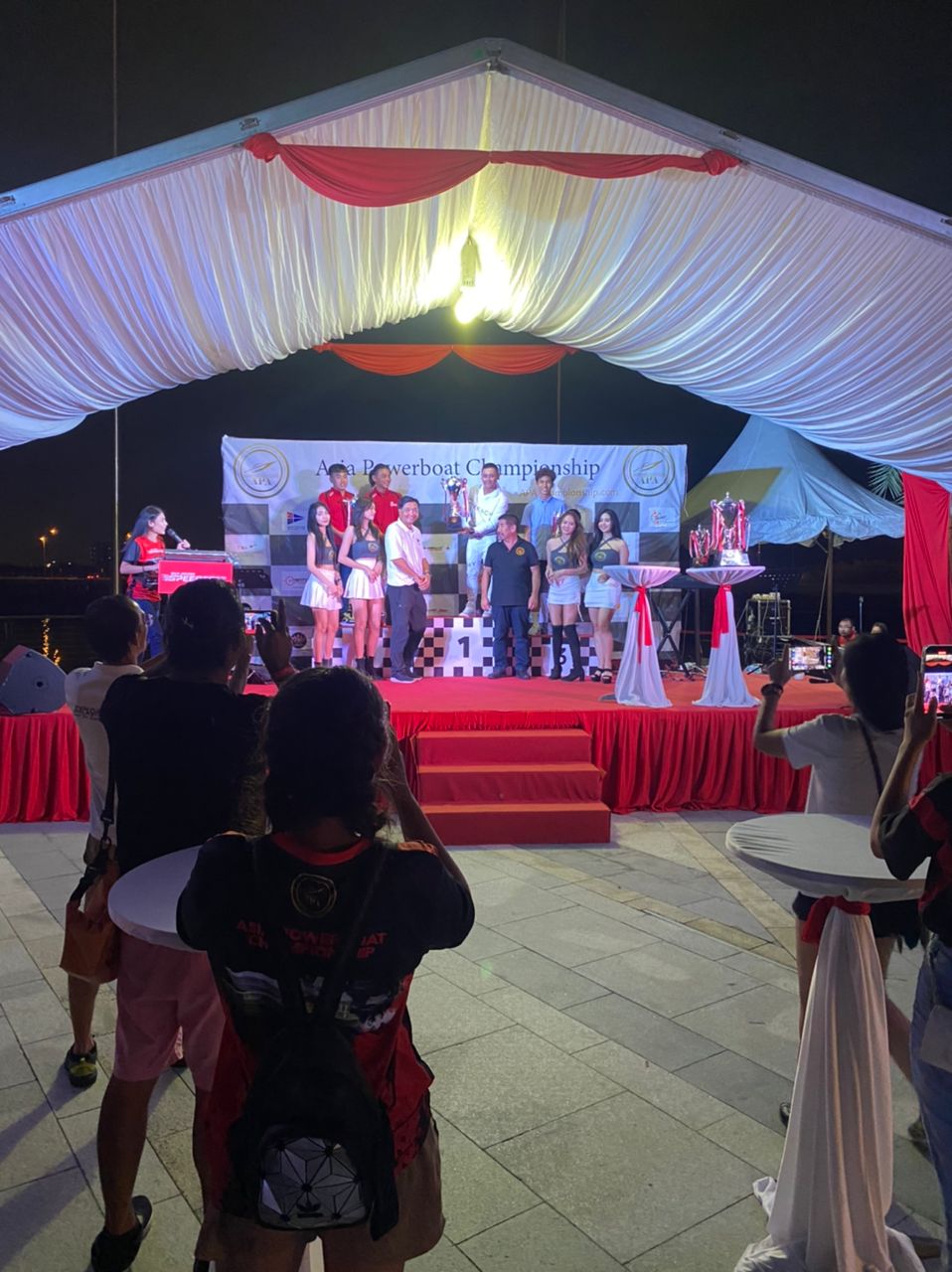


MAJLIS PERASMIAN JOHOR YACHT CLUB, JOHOR JEEP OWNERS CLUB DAN PERTANDINGAN JOHOR SPEED FEST 2022


26 November 2022 (Sabtu) – Duli Yang Maha Mulia Sultan Ibrahim Ibni Almarhum Sultan Iskandar, Sultan Yang Dipertuan Bagi Negeri dan Jajahan Takluk Johor Darul Ta’zim berkenan berangkat melancarkan Johor YACHT Club, Johor Jeep Owners Club dan Pertandingan Johor Speed Fest 2022 yang berlangsung bertempat di R&F Marina Place, Johor Bahru, Johor hari ini.
Johor Yacht & Recreation Club (JYRC) @ R&F Marina Place adalah merupakan hub sukan dan rekreasi antara yang terbaharu di negeri Johor.
Sempena perlancaran hub tersebut, program Johor Speedfest juga turut dilangsungkan selama tiga hari bermula pada 25 November 2022 (Jumaat) dan akan berakhir pada 27 November 2022 (Ahad).
Pelbagai aktiviti menarik telah disediakan oleh pihak penganjur termasuklah pameran himpunan kenderaan berkuasa tinggi, persembahan kebudayaan dan bazar serta gerai jualan makanan turut diadakan bagi memeriahkan festival yang julung kali dianjurkan bertempat di R&F Marina Place, Johor Bahru, Johor. Masuk adalah percuma.
TUANKU SULTAN JOHOR LAUNCHES JOHOR YACHT & RECREATION CLUB AT R&F MARINA PLACE IN JB


Sultan Ibrahim Sultan Iskandar
TUANKU SULTAN JOHOR LAUNCHES JOHOR YACHT & RECREATION CLUB AT R&F MARINA PLACE IN JB
HM Tuanku Sultan Johor today (26th Nov) launched the Johor Yacht & Recreation Club (JYRC) at R&F Marina Place (JYRC) – the newest sports and recreation hub in Johor Bahru.
Johor Jeep Owners Club chairman Datuk Md Othman Yusof and R&F Malaysia chairman Mr Li Mingliang, were among a host of dignitaries to welcome His Majesty to the all-new marina, which is an integral part of the exclusive R&F waterfront development overlooking the Straits of Johor and Singapore.
In conjunction with the launch, JYRC is also organising a three-day Johor Speedfest until Sunday (27 Nov).
This unique lifestyle and entertainment event will, among others, showcase an exhibition of supercars, superbikes, power boats, jet skis, yacht and seaplanes .
The event, which is supported by the Johor Tourism Department, will also feature cultural and entertainment festivities and a food bazaar. Admission is free.
The highlight of Johor SpeedFest is the Asia Powerboat Championship, which will see top teams from around the region compete for points in the Asian circuit, including Malaysia’s first all-female team.
The event is a prelude to plans to promote Johor and the Straits of Johor as the venue for regional and international power boat racing events
It is hoped that Johor Speedfest will also boost and position the State as a leading destination for adventure and recreation in the region.
OCTOBER 2022
"Really liked the gold mining game and activites! Keep up the good work!"
Ying Li Tan
Deputy Director, Sembcorp
"It's really enjoy and have fun."
Yen Lim
Manager, Stone forest Accountserve Pte Ltd
"Excellent team building session which brings out the cooperation of everyone."
Gary
RSM
"Great team building. Able to create genuine relationships. Fun times. Explored Singapore!"
James
Klook
Certified Master Facilitator®

Certified Master Facilitator®
Our FAcilitator, Sasi KUMAR, is now a Certified Master Facilitator®. The title Certified Master Facilitator® is a mark of excellence in facilitation. It distinguishes someone as having achieved the highest certification available in the industry.
The certification process assesses candidates against a rigorous set of competencies. These competencies were developed based on input from over 450 FAcilitators and clients. The result, a certification with the distinction of quality, integrity, talent and service, is one that FAcilitators can aspire to achieve and clients can have confidence in.
With this latest certification, Sasi is now able to deliver more Process FAcilitation programmes that do not just stop at the teambuilding session but go further with stakeholders to develop their teams or achieve effective meetings results using tools such as LSP – LEGO Serious Play, World Cafe, Open Space Technology and many other Process FAcilitation tools.
Find out more about the types of advanced programmes that can be offered here:
FOCUS Consulting
Going Zero Waste for our Programmes

Going Zero Waste for our Programmes
Leaning on technological breakthroughs, we have proudly made some changes to the delivery of programmes to align with our sustainability vision. We have gone ZERO WASTE for two of our popular programmes; The Rollercoaster Challenge! and The Incredible Race Challenge!
For The Rollercoaster Challenge! instead of giving participants straws and balloon sticks, we have invested in rubber tubes that can do the same job but are reusable! This means that after each programme for The Rollercoaster Challenge!, we are able to reuse 100% of the materials!
For The Incredible Race Challenge! We used to print hard copies for our participants. But we have since moved to have participants’ using their mobile phones to access race content via the e-forms. This has made the activity efficient, interactive and participative for all members of the team! A “leaderboard” is also created electronically via the links where teams can view other teams’ performance in real-time!
Emergenetics Profiling


Emergenetics Profiling
Emergenetics is a tool used to achieve a profile of the person’s behavioural and thinking characteristics.
The theory behind Emergenetics is people are already born with thinking and behavioural traits. The environment and social surroundings then modify and alter these traits and behaviours. Essentially, a person has genetic traits that the environment affects.
The emergenetics test is a self-assessment questionnaire that maps the thinking and behavioural traits of an individual. This profile is broken down into seven emergenetics attributes; four thinking attributes and three behavioural attributes. When each attribute is given a colour, the Emergenetics profile becomes a palette of colours mixed together that paints a picture of one’s personality.
Musings of the FAcilitator

Musings of the FAcilitator
Since the turn of 2022, we’ve tightened the sails and steadied the helm to cruise through a challenging but rewarding year, with organisations yearning to shake off the rust of COVID-19 times.
In the last 2 quarters, we have delivered 199 number of programmes for MNCs, SMEs, Government Agencies and Non-profit Organisations.
Reviewing the data and experiences, we observed four focus areas of teams who have walked through our doors in 2022:
Referencing Bruce Tuckman’s Team Development Model, there are five stages in a relationship – Forming, Storming, Norming, Performing and Adjourning. The model states that everyone will start from the Forming stage when there is a new relationship. From there, teams move progressively towards the Performing stage where they are then able to execute with synergy.
The Covid Babies
The turbulent covid times threw the workforce into disarray with huge turnover, redefining of workplace roles, and murky confusion matching skills and productivity. New hires coming into the scene went straight into working from home and though they were comfortable, a good portion could still feel the jitters.
Many organisations saw themselves back to the Forming stage with these new members joining in, with the challenge being to claw their way out of the Forming stage and cruise into the Storming stage. The lack of physical interaction meant that teams were unable to have face-to-face conflict resolution opportunities.
This phenomenon has created two scenarios, 1) everyone stays at the Forming stage and remains ineffective as a team and 2) teams having a pseudo Norming false preset that they are all working together well.
The lack of physical interactions had eliminated the Storming stage and left teams stagnant.
The silver lining is that some leaders have recognised this phenomenon in the early stage and they started creating small group gatherings virtually and/or physically. They created mentorship programmes for onboarding processes that allowed the new hires to feel welcomed and created a sense of belonging.
Since Apr 2022, we saw an influx in teams coming for physical teambuilding, it was evident that many organisations needed to break away from the Forming stage to become effective and efficient
To combat a lowered sense of belonging and purpose, organisations have started to return to physical teambuilding.
Being a teambuilding provider, our role is not to make the team members feel the sense of belonging or give them their purpose. We have customised and curated programmes to get teams to acknowledge what is lacking and formulate action plans. The outcome of the programme is for the teams to acknowledge the gaps and to have them derive their own action plans to move forward as a team.
Through the interventions, we have noticed that leaders have acknowledged this phenomenon and made arrangements for the individuals to have the sense of belonging to the Organisation, such as arranging team dinners, having team retreats and arranging for face to face sessions to build their purpose to align with that of the Organisation again.
The observation of the team moving back to the Forming stage, they are forgiving for mistakes and each other’s different perspectives.
Seniors are more patient and willing to help out the juniors. Interestingly some juniors could have been with the organisation for nearly three years now, and getting this excellent treatment makes the working atmosphere pleasing.
Yet, this forgiving nature could be temporary since everyone is still in the Forming stage. The actual test happens during a Storming stage when people become comfortable working with each other and start sharing their opinions and emotions.
One of the interventions we did in FOCUS Adventure was to quicken the process from Forming to Storming at least by the end of the programme to ensure that teams do not stay in the pseudo-norming stage where everyone thinks that they are performing well as a team, when in fact the lack of storm creates silent frustrations which might build, and explode with time.
Finally, we have seen how the new employee has been bold and willing to build bridges with the seniors. In the olden days, juniors would not take the step to take this action but silently followed instructions. This created the phenomenon of the “Monkey Experiment”, where sometimes people don’t know why they are doing what they are doing. But today’s new hires are well aware and came prepared with the “Why” question.
This “Why” question they asked is not to put down their seniors in the organisation but to build bridges, to understand the seniors and the organisation better.
Some teams welcome this movement as it gets everyone to move into a new dimension and start thinking differently. But there is also the team dominated by the seniors, who still have the older mentality of “listen to instructions first before giving ideas”.
Of course there is debate as there is no right or wrong, the answer depends on the situation that we are in. What matters is to see the other perspective and to remember that at the end of the day, to build bridges between individuals.
Summary
This year has been exciting, with teams back physically. The question now will then be, is this new phenomenon helpful and effective?

